
Korean beauty has transformed everyday skincare with lightweight formulas, innovative ingredients, and routines designed around long-term skin health. Finding the best korean skincare can feel overwhelming because hundreds of products promise smoother texture, brighter tone, and glowing skin. The right choices, however, depend on your skin type, concerns, lifestyle, and climate. Whether you struggle with oily skin, dryness, sensitivity, or breakouts, Korean skincare offers targeted options without requiring an elaborate routine. From gentle cleansers and hydrating essences to treatment serums and daily sunscreen, each step can serve a clear purpose. This guide explores the best korean skincare options worth considering, helping you build a practical routine that supports a healthy, radiant complexion without unnecessary products or complicated layering.
What Is Korean Skincare and Why Is It So Popular?

Korean skincare, often called K-Beauty, is a philosophy centered on maintaining healthy-looking skin through consistent care. Instead of relying on one aggressive treatment, the approach commonly combines cleansing, hydration, targeted treatment, moisturization, and sun protection. That makes the best Korean skincare routines especially appealing to people who prefer gradual improvement over harsh, dramatic interventions. The popularity is also supported by constant product innovation, sophisticated textures, and convenient formulas that fit modern routines. In the United States, access has become easier as major retailers increasingly carry Korean brands, giving shoppers more opportunities to compare formulas and ingredients.
The science behind a good routine is more important than whether a product comes from Korea, the United States, or elsewhere. Your skin produces sebum, a natural oily substance that helps protect the surface, while pores release oil and sweat. Hormones called androgens can increase oil production, particularly during adolescence and adulthood. When oil combines with dead skin cells, bacteria, and other debris, pores can become blocked. That process contributes to blackheads, whiteheads, and other blemishes. A sensible routine therefore aims to cleanse without stripping, hydrate without overwhelming the skin, and protect against ultraviolet exposure.
What Makes Korean Skincare Different From Western Skincare?
The biggest difference is usually philosophy rather than geography. Traditional K-Beauty often emphasizes hydration, gentle formulas, and incremental layering, while American consumers may encounter more treatment-focused routines built around a single active ingredient. Neither approach is automatically superior. The best Korean skincare method borrows the useful principle of simplicity while retaining evidence-based treatments when they are appropriate.
Why Is K-Beauty So Popular in the United States?
American shoppers have embraced K-Beauty because it combines sensory appeal with ingredient-focused formulations. Lightweight essences, cushiony creams, hydrating masks, and elegant sunscreens offer alternatives to heavier products. Retail access is also expanding rapidly, including recent collaborations that make Korean brands easier for U.S. consumers to purchase through established beauty retailers.
Does Korean Skincare Actually Work?
Korean skincare can work well when the individual products contain useful ingredients and match your skin’s needs. The country of origin does not guarantee effectiveness. For example, a gentle cleanser may help remove excess oil, while salicylic acid can help unclog pores. Meanwhile, sunscreen can reduce ultraviolet damage and visible signs of premature aging. Results depend on formulation, regular use, and your specific concern.
Korean Skincare vs. Traditional American Skincare Approaches
Think of the difference like training versus sprinting. A minimalist routine can focus on a few proven products used consistently, while a multi-step K-Beauty routine gives you more opportunities to customize hydration and treatment. However, adding more layers does not automatically produce better skin. The best Korean skincare routine is the one you can follow comfortably without causing irritation.
Who Can Benefit Most From Korean Skincare?
Almost anyone can adapt the principles to their routine, including people with acne-prone skin, dry complexions, or sensitive skin. If your skin stings easily, prioritize fragrance-free or low-irritation formulas and introduce products slowly. If you experience persistent acne, severe redness, or unusual changes, skincare products should not replace professional evaluation.
Best Korean Skincare Products for Glowing, Healthy Skin
Choosing the best Korean skincare products becomes much easier when you shop by function instead of hype. A cleanser removes accumulated oil and debris, a toner or essence adds moisture, a serum targets a specific concern, a moisturizer supports the surface, and sunscreen protects during daytime. This sequence resembles building a house: cleansing prepares the foundation, treatment addresses specific weaknesses, and moisturizer helps maintain the finished structure. For everyday use, prioritize products that feel comfortable and do not leave your skin persistently tight, greasy, or irritated. Dermatologists also recommend choosing products suited to your skin type and using gentle cleansing rather than repeatedly stripping the skin.
The following five categories represent a practical starting point for the best Korean skincare routine. A water-based cleanser works particularly well after an oil cleanser at night, while a cleansing balm can dissolve makeup and sunscreen. A hydrating toner or essence can support skin hydration, while a targeted serum can address dullness or uneven tone. Finally, a lightweight moisturizer and daily sunscreen complete the basic framework. For oily complexions, look for oil-free skincare and non-comedogenic products that are less likely to contribute to blocked pores.
1. Best Korean Cleanser for a Fresh, Balanced Complexion
A good Korean cleanser should remove dirt, sunscreen, and excess oil without leaving your face feeling squeaky or stripped. For nighttime routines, double cleansing can be useful when you wear makeup or water-resistant sunscreen. Start with an oil cleanser or cleansing balm, then follow with a gentle water-based formula. In the morning, many people can simply use a mild cleanser or rinse with water, depending on their skin.
2. Best Korean Toner or Essence for Hydration
Modern K-Beauty toners are often designed to do more than remove residue. Hydrating formulas can add water and prepare the skin for subsequent products. Look for ingredients such as hyaluronic acid, glycerin, rice-derived ingredients, or soothing botanical extracts. If your complexion is easily irritated, choose a simple hydrating formula rather than an exfoliating toner packed with multiple acids.
3. Best Korean Serum for Brighter, Glowing Skin
A serum should solve a specific problem rather than simply add another layer. Niacinamide can be useful for uneven tone and excess oil, while hydrating serums can support dry or dehydrated skin. If pigmentation is your priority, consider ingredients with evidence for brightening rather than relying solely on claims about instant radiance. Introduce one treatment at a time so you can identify what actually benefits your skin.
4. Best Korean Moisturizer for a Healthy Skin Barrier
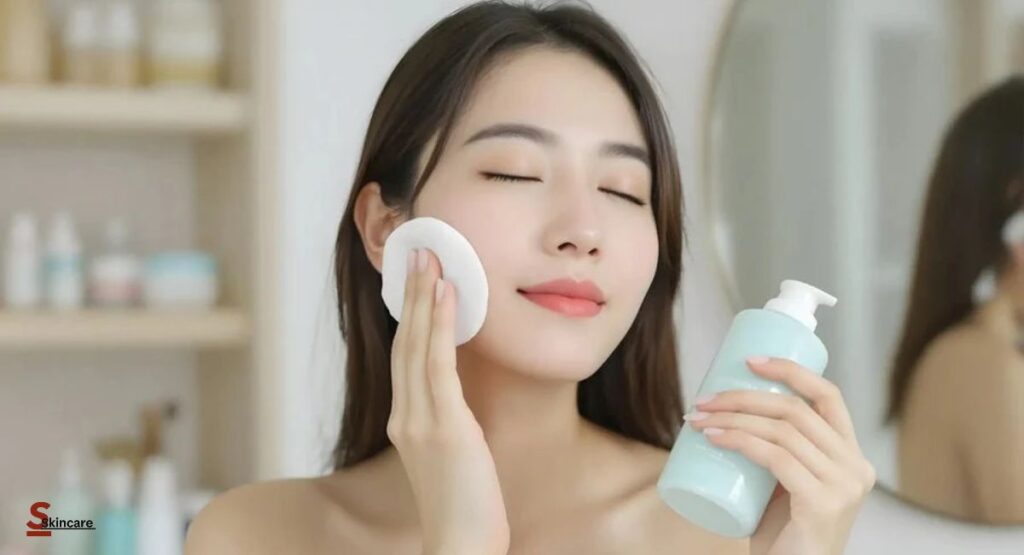
Even oily skin needs moisture. When the surface becomes excessively dry, it can feel tight and uncomfortable, while some people notice increased oiliness. A gel moisturizer can be a useful choice for humid conditions or oilier complexions. Dry skin may prefer richer creams containing ingredients that help support the skin barrier and reduce moisture loss.
5. Best Korean Sunscreen for Daily UV Protection
A beautiful routine loses much of its value without reliable sun protection. For daily use, dermatologists recommend SPF 30 or higher with broad-spectrum coverage. A product labeled broad-spectrum sunscreen protects against UVA and UVB radiation, while water resistance matters during swimming or heavy sweating. The SPF 50 products popular in K-Beauty can provide a higher labeled protection level, but application amount and reapplication still matter.
Best Korean Skincare Products Compared
| Product type | Main purpose | Useful ingredients | Best starting point |
| Cleanser | Removes dirt, oil, and sunscreen | Green tea, centella, mild surfactants | All skin types |
| Toner/Essence | Adds moisture and prepares skin | Rice, glycerin, hyaluronic acid | Dry or dehydrated skin |
| Serum | Targets specific concerns | Niacinamide, antioxidants, peptides | Most skin types |
| Moisturizer | Supports moisture balance | Ceramides, glycerin, snail mucin | Dry or sensitive skin |
| Sunscreen | Protects against UV exposure | Broad-spectrum UV filters | Everyone |
Best Korean Skincare by Skin Type
Your skin type should determine the texture and intensity of your routine. Someone with oily skin may enjoy watery layers and gel creams, while dry skin often benefits from richer textures and more occlusive ingredients. Excess oil does not mean your skin has enough water. In fact, oily skin can still be dehydrated. The distinction matters because aggressively removing oil may worsen discomfort and encourage a cycle of dryness and oiliness. Dermatologists recommend moisturizing even when skin feels oily, provided the formula suits the complexion.
The same principle applies to acne and sensitivity. If you have frequent acne breakouts, choosing every product for acne control can backfire when multiple irritating ingredients are combined. Your routine should instead balance treatment with soothing care. People with skin redness or sensitivity may need fewer active ingredients, while those with combination skin can use different textures on different areas. The best Korean skincare routine is therefore personalized rather than universally identical.
Best Korean Skincare for Oily Skin
Oily skin usually benefits from gentle cleansing, lightweight hydration, and products that do not feel heavy. If your face becomes shiny quickly, avoid assuming that stronger cleansing is automatically better. Choose lightweight formulas and consider ingredients such as niacinamide or salicylic acid when appropriate. Blotting excess oil can also be preferable to repeatedly washing your face throughout the day.
Best Korean Skincare for Dry Skin
Dry skin needs more than a temporary coating of cream. Look for hydrating ingredients that attract water and barrier-supporting ingredients that reduce moisture loss. Apply moisturizer while the skin remains slightly damp when practical. During winter, indoor heating can make dryness more noticeable, so you may need a richer cream than you would use during humid summer months.
Best Korean Skincare for Combination Skin
Combination skin requires strategic placement rather than an entirely different routine. Your forehead, nose, and chin may become oily while your cheeks feel dry. Use a lightweight formula across the face and add richer hydration only where needed. This approach prevents you from treating your entire face according to the needs of one small area.
Best Korean Skincare for Sensitive Skin
Sensitive skin needs restraint. Introduce new products individually, patch test when appropriate, and avoid stacking several exfoliating ingredients. Fragrance can also bother some people. If a product repeatedly burns, stings, or causes persistent redness, stop using it rather than trying to push through the reaction.
Best Korean Skincare for Acne-Prone Skin
Acne-prone skin benefits from gentle care and proven acne ingredients. Salicylic acid can help exfoliate inside pores, while benzoyl peroxide and topical retinoids have stronger evidence for treating acne. Korean products can support the routine, but they should not be treated as replacements for established acne therapies.
How to Tell Which Skin Type You Have
Cleanse your face gently and observe how it feels after some time without applying heavy products. If the entire face becomes shiny, you may have oily skin. If it feels tight or flaky, dryness may be more prominent. If your T-zone becomes oily while your cheeks remain comfortable or dry, you may have combination skin. Persistent stinging deserves professional attention.
How to Build a Korean Skincare Routine

A successful routine should feel almost boring after the novelty disappears. That is a good sign. The best Korean skincare regimen usually starts with a few essential steps and adds treatments only when there is a clear reason. In the morning, cleanse as needed, hydrate, moisturize, and apply sunscreen. At night, remove makeup and sunscreen, cleanse, apply treatment products, then moisturize. Dermatologists generally recommend cleansing twice daily and after sweating, while sunscreen should be the final skincare step before makeup.
The most common mistake is confusing complexity with effectiveness. You do not need ten products to practice K-Beauty. For example, someone with oily acne-prone skin could use a gentle cleanser, hydrating toner, targeted treatment, gel moisturizer, and sunscreen. Someone with dry skin could use a gentler cleanser, hydrating essence, serum, richer moisturizer, and sunscreen. The best Korean skincare routine changes according to your needs rather than following a fixed number of steps.
Korean Morning Skincare Routine
Morning care should emphasize protection. Start with gentle cleansing if necessary, then apply hydrating products, treatment serum, moisturizer, and sunscreen. If your sunscreen already feels moisturizing enough, you may not need a separate cream. This can make your routine more comfortable during hot American summers.
Korean Nighttime Skincare Routine
Nighttime is when you can focus more heavily on cleansing and targeted treatments. If you wore sunscreen or makeup, begin with an oil-based cleanser or balm. Follow with a gentle water-based cleanser, then apply your chosen toner, essence, serum, and moisturizer. Avoid introducing several potent treatments at once.
Step 1: Oil Cleanser or Cleansing Balm
Oil-based cleansers work by interacting with oil-soluble substances such as makeup, sunscreen, and sebum. Massage gently rather than scrubbing aggressively. Rinse thoroughly, then follow with a water-based cleanser if needed. This method is especially practical at night after a full day outdoors.
Step 2: Water-Based Cleanser
Your second cleanse should leave the skin clean but comfortable. If your face feels tight immediately afterward, the cleanser may be too harsh or you may be washing excessively. Dermatologists recommend limiting face washing to twice daily and after sweating to help reduce irritation.
Step 3: Toner or Essence
A toner or essence can provide a light hydration layer before thicker products. If you use an exfoliating toner, avoid treating it as mandatory every day. A simple hydrating toner may be more appropriate for routine use, especially when your skin already contains active treatments.
Step 4: Serum or Ampoule
Choose your serum based on your main concern. Niacinamide may suit uneven tone and oily skin, while hydrating formulas can help dehydration. Retinoids have stronger evidence for acne and certain signs of aging, but they can irritate some users and require careful introduction.
Step 5: Moisturizer
Apply enough moisturizer to prevent uncomfortable dryness without creating an excessively heavy film. If your skin is oily, choose a gel or lotion texture. If it is dry, select a cream with barrier-supportive ingredients. Moisturizer can also make acne treatments easier to tolerate when those treatments cause dryness.
Step 6: Sunscreen
Sunscreen belongs at the end of your morning skincare sequence. Choose broad-spectrum SPF 30 or higher and apply it before outdoor exposure. Reapplication becomes important during prolonged outdoor activity, swimming, or sweating.
Do You Really Need a 10-Step Korean Skincare Routine?
No. Ten steps are an option, not a requirement. A five-step routine that you follow every day can outperform a complicated routine that constantly changes. The best Korean skincare system should be sustainable enough for busy mornings, travel, workdays, and weekends.
How Long Should You Wait Between Skincare Steps?
You generally do not need to wait several minutes between every product. Allow each layer to spread comfortably and absorb enough that the next product does not immediately pill or slide around. The exception is following specific medication instructions, where your dermatologist or product label should take priority.
Simple Korean Skincare Routine for Beginners
Start with cleanser, moisturizer, and sunscreen. Once those feel comfortable, add a hydrating toner or serum. After your basic routine is stable, introduce one targeted active if you have a specific concern. This gradual approach makes it much easier to identify irritation and measure improvement.
Best Korean Skincare Ingredients to Look For
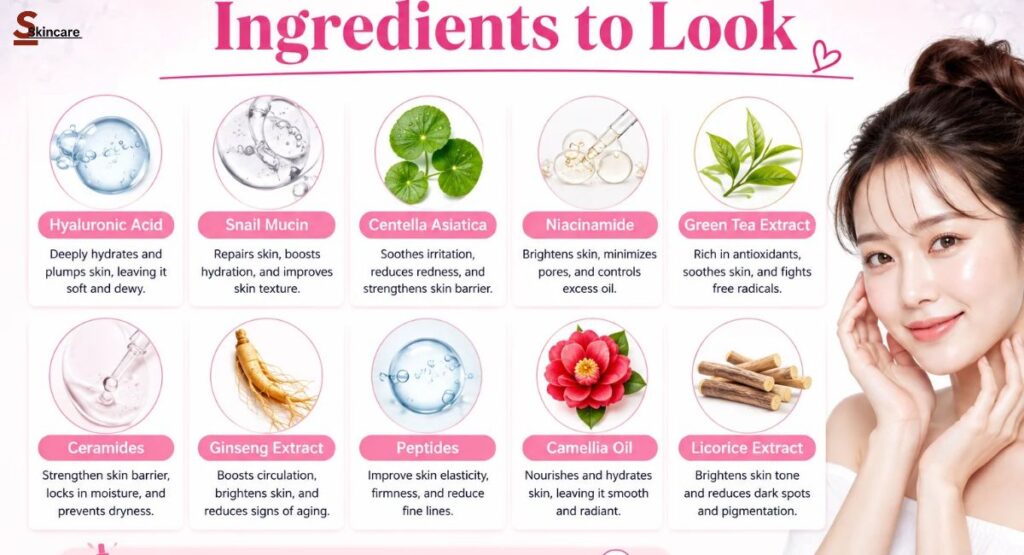
Ingredient knowledge helps you avoid buying products based purely on attractive claims. Snail mucin is commonly used in K-Beauty for its moisturizing and conditioning properties, while centella asiatica is popular in soothing formulas. Propolis appears in products designed around hydration and skin comfort. Meanwhile, hyaluronic acid is a humectant that helps attract water. These ingredients can complement a routine, but the complete formulation matters more than one fashionable ingredient printed on the front label.
For oily and acne-prone skin, AHA, BHA, and PHA are common exfoliating categories with different characteristics. Salicylic acid, a BHA, can penetrate into oil-rich pores and is used to help unclog them. Niacinamide is another versatile ingredient frequently found in Korean formulas. However, irritation can occur when several actives are layered aggressively. Dermatology guidance supports salicylic acid as one acne-care option, while stronger therapies such as topical retinoids and benzoyl peroxide have established roles in acne treatment.
Snail Mucin for Hydration and Skin Repair
Snail mucin is valued primarily for its moisturizing and conditioning qualities. It can make skin feel softer and more supple, making it popular in essences and serums. If you are sensitive to the ingredient or its formulation, however, skip it rather than assuming every trending product suits your skin.
Centella Asiatica for Sensitive and Irritated Skin
Centella asiatica has become a signature K-Beauty ingredient because of its association with soothing skincare. It appears in creams, serums, cleansers, and sunscreens. Look for a well-formulated product rather than assuming the ingredient alone guarantees results.
Niacinamide for Oil Control and Uneven Tone
Niacinamide is a form of vitamin B3 used in many skincare formulas. It can be a useful ingredient for people concerned about oiliness and uneven-looking tone. Start with a sensible concentration rather than automatically choosing the strongest formula available.
Hyaluronic Acid for Long-Lasting Hydration
Hyaluronic acid helps attract water and can make dehydrated skin feel more comfortable. It works particularly well within a broader moisturizing routine. Applying a hydrating product followed by moisturizer can help create a more comfortable finish.
Ginseng for Antioxidant and Anti-Aging Support
Ginseng is a traditional Korean ingredient that has become a popular modern skincare component. It is commonly included in essences, creams, and serums designed around antioxidant support and a healthy-looking complexion. Treat it as a complementary ingredient rather than a miracle cure.
Rice Extract for Brighter-Looking Skin
Rice-derived ingredients are common in Korean skincare, particularly in products designed for softness and radiance. Their popularity reflects both Korean beauty traditions and modern formulation techniques. If your goal is brightness, compare the entire formula and supporting ingredients rather than choosing a product solely because it contains rice.
Propolis for Hydration and Soothing
Propolis is produced by bees and appears in various skincare formulations. It is often marketed for soothing and moisturizing benefits. If you have known sensitivities to bee-related ingredients, check the complete ingredient list before trying it.
Green Tea for Antioxidant Protection
Green tea extract contains antioxidant compounds and frequently appears in formulas designed for oily, stressed, or environmentally exposed skin. It can fit neatly into a simple routine because it often appears alongside hydrating and calming ingredients.
Ceramides for a Stronger Skin Barrier
Ceramides are lipids naturally found in the skin and are widely used in barrier-supportive moisturizers. They can be particularly useful when your routine contains drying treatments. A strong barrier helps your skin tolerate daily environmental stress and active ingredients more comfortably.
AHA, BHA, and PHA for Exfoliation
Chemical exfoliation helps loosen accumulated surface cells and can improve texture. AHAs generally work on the skin surface, while BHAs such as salicylic acid are particularly useful for oilier, congested skin. PHAs are often considered gentler. Regardless of the acid, overuse can cause irritation, so frequency should match your tolerance.
Best Korean Skincare for Specific Skin Concerns
The right routine starts by identifying what you actually want to change. If your concern is uneven skin tone, your strategy may center on brightening ingredients and consistent sunscreen. If your main problem is enlarged pores, focus on controlling congestion rather than trying to permanently shrink pore openings. If dryness is the problem, increasing hydration and supporting the barrier usually makes more sense than adding strong exfoliants. The best Korean skincare routine should therefore solve a defined problem rather than chase a vague promise of perfection.
It is also useful to separate cosmetic concerns from medical conditions. Mild blemishes may respond to over-the-counter skincare, but persistent inflammatory acne can require treatment beyond cosmetics. For example, dermatology guidelines support benzoyl peroxide, topical retinoids, salicylic acid, and azelaic acid in appropriate acne management. Sunscreen remains important because ultraviolet exposure can worsen discoloration and contributes to premature aging.
Best Korean Skincare for Acne and Breakouts
For acne, prioritize gentle cleansing and non-comedogenic products. Salicylic acid can help unclog pores, while benzoyl peroxide targets acne-associated bacteria. Avoid scrubbing or repeatedly drying your face because irritation can make breakouts harder to manage. If acne is persistent, painful, or scarring, consult a dermatologist rather than endlessly changing products.
Best Korean Skincare for Enlarged Pores
Pore size is influenced partly by genetics and skin structure, so no skincare product can permanently erase pores. However, controlling oil and keeping pores clear can make them appear less noticeable. Gentle exfoliation, niacinamide, and non-comedogenic hydration can support that goal without relying on harsh pore-tightening claims.
Best Korean Skincare for Dark Spots and Hyperpigmentation
Hyperpigmentation often becomes more noticeable after acne or sun exposure. Daily sunscreen is therefore essential. Brightening ingredients can complement protection, but progress takes time. If discoloration is persistent or rapidly changing, professional assessment is more appropriate than experimenting with increasingly aggressive products.
Best Korean Skincare for Dull Skin
Dullness can result from dryness, accumulated surface cells, environmental exposure, or uneven pigmentation. A hydrating routine can improve the appearance of dehydrated skin, while carefully controlled exfoliation can improve texture. The best Korean skincare strategy for dullness should create luminosity without sacrificing comfort.
Best Korean Skincare for Fine Lines and Wrinkles
Fine lines and wrinkles are influenced by intrinsic aging and environmental exposure. Sunscreen is one of the most important daily defenses against UV-related aging. Retinoids also have strong dermatological support for improving fine lines and wrinkles, although they may irritate sensitive skin and should be introduced carefully.
Best Korean Skincare for Redness and Sensitivity
For redness, simplify first. Remove unnecessary exfoliants and strongly fragranced products, then focus on gentle cleansing and barrier-supportive hydration. If redness persists, burns, or comes with other symptoms, a dermatologist can determine whether an underlying skin condition requires treatment.
Best Korean Skincare for Dehydrated Skin
Dehydrated skin lacks water, while dry skin generally refers to reduced oil content. You can therefore have oily yet dehydrated skin. Hydrating layers containing humectants, followed by an appropriate moisturizer, can improve comfort without requiring a heavy cream.
Best Korean Skincare for Glass Skin
The famous glass-skin appearance is essentially a visual goal involving smooth texture, hydration, and luminosity. Real skin naturally contains pores and texture, so social-media images can create unrealistic expectations. Focus on healthy, comfortable skin rather than trying to eliminate every visible feature.
How to Choose the Best Korean Skincare Products for You
Shopping becomes easier when you identify your skin type, primary concern, preferred texture, and budget before opening a retailer’s website. Start with one or two essential products rather than buying an entire collection. Check the ingredient list and packaging claims, then consider whether the formula fits your existing routine. The best Korean skincare purchase should solve a problem you actually have. A beautiful serum that duplicates another product adds cost without necessarily adding value.
Pay particular attention when combining active ingredients. For example, using several exfoliating acids alongside a retinoid may overwhelm sensitive skin. Instead, build slowly and monitor how your complexion responds. Patch testing can help identify irritation, although it cannot guarantee that a product will never cause a reaction. Dermatologists also recommend selecting products labeled non-comedogenic when acne or clogged pores are concerns.
Start With Your Skin Type and Main Concern
Your skin type gives you the starting framework, while your primary concern determines the treatment. Someone with oily acne-prone skin may prioritize pore-friendly hydration and acne treatment. Someone with dry skin may prioritize barrier support. Avoid choosing products simply because they are popular.
Check the Ingredient List Before Buying
Marketing language can be persuasive, but the ingredient list tells you much more. Look for active ingredients relevant to your concern and check for potential irritants if your skin is sensitive. Remember that ingredient concentration, formulation, and stability influence performance.
Choose Products That Support Your Skin Barrier
Healthy skin needs a functioning barrier. If your face frequently feels tight, stings after products, or becomes unusually flaky, your routine may be too aggressive. Reduce exfoliation and simplify until your skin feels comfortable again.
Avoid Using Too Many Active Ingredients Together
More actives can mean more irritation rather than faster results. For example, combining several acids with retinoids may be excessive for a beginner. Introduce products individually and give your skin enough time to demonstrate whether a treatment helps.
Patch Test New Korean Skincare Products
Patch testing is especially sensible when trying unfamiliar formulas or products containing ingredients that have irritated you previously. Apply a small amount according to the product’s instructions and observe your skin. Stop if you develop significant burning, swelling, or a persistent rash.
How to Introduce a New Product Without Causing Irritation
Add one new product at a time. Use it at a modest frequency initially, particularly when it contains an active ingredient. This creates a useful baseline. If irritation develops, you can identify the likely cause instead of wondering which of six new products triggered it.
When Should You Stop Using a Skincare Product?
Stop using a product when it causes persistent burning, swelling, severe itching, or worsening irritation. Temporary mild tingling does not automatically mean a product is working. Skin should not need to suffer before a treatment becomes effective. Severe or persistent reactions deserve medical attention.
Common Korean Skincare Mistakes to Avoid
One common mistake is over-cleansing because the skin feels oily. Another is skipping moisturizer because the complexion looks shiny. A third is treating every viral ingredient as necessary. Dermatologists emphasize gentle care, appropriate moisturization, and non-comedogenic products for acne-prone skin rather than aggressive scrubbing or constant experimentation.
1. What makes the best Korean skincare products different?
The best Korean skincare products often focus on gentle, hydrating, and skin-supporting ingredients. Many Korean formulas are designed to improve the skin barrier while providing long-lasting moisture and a healthy-looking glow.
2. What ingredients should I look for in the best Korean skincare?
Popular ingredients include snail mucin, centella asiatica, niacinamide, hyaluronic acid, ceramides, ginseng, and green tea extract. The right ingredient depends on your skin type and specific skincare concerns.
3. Is the best Korean skincare suitable for sensitive skin?
Many Korean skincare products are formulated with soothing and hydrating ingredients, making them suitable for sensitive skin. However, always check the ingredient list and perform a patch test before introducing a new product.
4. Can the best Korean skincare help with acne?
Yes, some Korean skincare products may help support acne-prone skin. Ingredients such as niacinamide, centella asiatica, and gentle exfoliating acids can help manage excess oil, soothe irritation, and improve the appearance of blemishes.
5. How do I choose the best Korean skincare routine?
Start with your skin type and main concerns. A simple routine can include a gentle cleanser, hydrating toner or essence, treatment serum, moisturizer, and sunscreen during the daytime. Introduce new products gradually to see how your skin responds.
